Le Mans Contenders 2026: Toyota vs Ferrari Endurance Racing Car Comparison
In-depth car comparison of the Toyota and Ferrari entries for the 2026 24 Hours of Le Mans, analyzing specs, reliability history, and what it means for production car tech.

Le Mans Contenders 2026: Toyota vs Ferrari Endurance Racing Car Comparison
The 2026 season at Le Mans shapes up as one of the most intriguing car comparison matchups in recent memory. Toyota’s TR010 Hybrid takes on Ferrari’s 499P, and both cars push hybrid endurance tech to its limits. Watching how they trade outright speed for the kind of durability that lasts a full day gives us a real sense of where the sport is headed.
Toyota TR010 Hybrid: What’s New Under the Skin
Toyota brings the TR010 Hybrid into the 2026 FIA World Endurance Championship with noticeable bodywork updates. The front end is reshaped, sidepods reworked, and the rear wing revised. These tweaks come from hard lessons in previous seasons and focus on keeping the car consistent when fuel loads change and drivers get tired. The squad now races under the Toyota Racing name, a shift that lines up with wider company goals rather than the old Gazoo Racing identity.
Ferrari 499P: The Details Behind Three Straight Wins
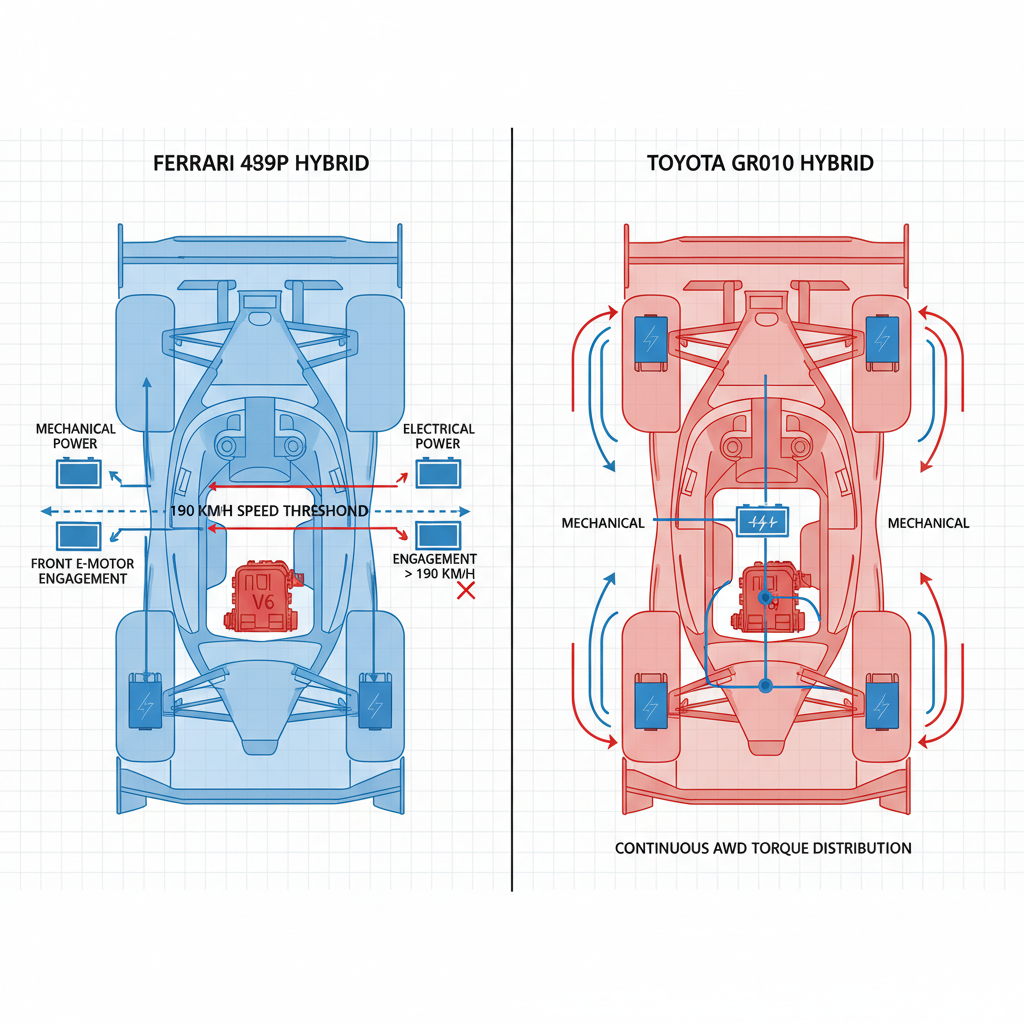
Ferrari sticks with the 499P and its 3.0-liter twin-turbo V6 hybrid setup. System output sits right around 1,000 horsepower. The carbon-fiber monocoque uses the V6 itself as a stressed member, which adds rigidity without extra pounds. Drive goes to all four wheels, but the front electric motor only kicks in above 190 km/h. That choice cuts tire stress at lower speeds while still letting the team deploy energy precisely when it matters most.
How the Two Cars Actually Stack Up on Track
Raw pace numbers tell only part of the story. Over 24 hours those small differences in efficiency add up fast. The car that keeps higher average speeds without extra pit stops usually takes the win.
Reliability Lessons From Past Campaigns
Ferrari arrives with three Le Mans wins already in the bag. Early gremlins with the 499P have mostly been sorted, leaving a car that has proven it can run the distance. Toyota brings years of front-running experience, yet the TR010 Hybrid still needs to show its new aero package holds together for the full race. Both teams fight the same core issues: keeping hybrid components cool and managing energy systems through the night. Toyota’s drivability updates aim to keep drivers sharper for longer.
What These Machines Mean for Road Cars
Technology tested here rarely stays on track. Ferrari’s motor-engagement strategy hints at smarter thermal management that could show up in future road-going hybrids. Carbon-fiber techniques perfected for the 499P monocoque already trickle into limited-edition GT cars. Toyota’s focus on predictable aero and software-driven energy use points toward road cars that feel alive yet sip fuel. These endurance programs keep pushing solutions that balance speed with everyday reliability.
In the end this car comparison between the TR010 Hybrid and 499P shows more than just which team leads on Sunday. It reveals how the specs chosen for one brutal race continue shaping what drivers will find in showrooms years later.


