
Best PHEVs for UK Company Cars 2026: Car Buying Guide to Cut BIK Tax
Find the top plug-in hybrids that maximize tax savings with this car buying guide covering prices, fuel efficiency, and real ownership costs.

Best PHEVs for UK Company Cars 2026: Car Buying Guide to Cut BIK Tax
Pick the wrong plug-in hybrid and you could hand over thousands extra in tax next year. This car buying guide walks through the PHEVs that actually keep BiK low thanks to decent electric range and sensible CO₂ numbers. The right choice turns a company car into a proper money-saver instead of a tax trap.
How BiK Tax Works for PHEVs in 2026
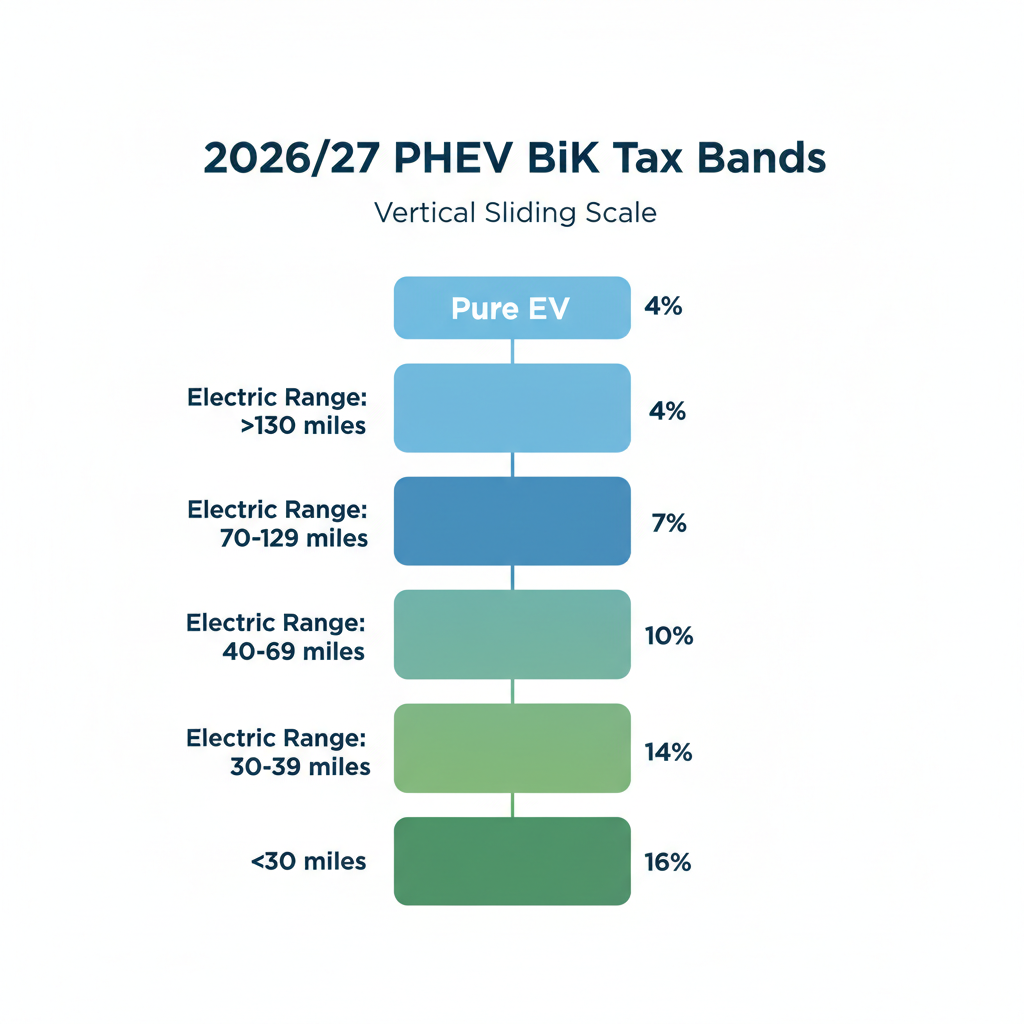
BiK rates for PHEVs hinge on electric range once CO₂ sits between 1-50g/km. The 2026/27 thresholds are straightforward. Pure electrics sit at 4%. PHEVs over 130 miles electric also pay 4%. Drop to 70-129 miles and it rises to 7%. The 40-69 mile band costs 10%, 30-39 miles hits 14%, and anything under 30 miles lands at 16%. That sliding scale pushes drivers toward models with bigger batteries rather than the cheapest badge.
Petrol and diesel cars still face higher BiK rates. Plenty of drivers use PHEVs as a halfway house while they work out if full electric fits their life. The tax gap makes the maths clear for anyone who can plug in regularly.
Top Low-CO₂ PHEVs Worth Considering for Fleets
Five models keep coming up for company use because they balance price, range and low emissions. The BMW 530e starts around £60,000 and suits directors who want a proper saloon. The Volkswagen Golf eHybrid opens at £36,500 and works well for teams that need a practical hatch. MG’s HS Plug-in Hybrid undercuts everyone at £32,300 while still clearing 50 miles electric on paper. The Skoda Kodiaq iV from £42,200 adds seven seats for bigger crews. Toyota’s Prius Plug-in Hybrid at £37,900 brings that familiar hybrid reliability.
Real-World Numbers on Fuel Efficiency Cars
Official tests give a starting point, but UK roads tell a different story. The MG HS claims over 50 miles electric in perfect conditions. Drivers who skip charging lose most of the tax edge pretty quickly.
Car Comparison: Prices, Tax Hits and Running Costs
Entry prices spread out across the shortlist. MG leads at £32,300, then Golf at £36,500 and Prius at £37,900. Kodiaq sits at £42,200 and the BMW tops the range at £60,000. A 40% taxpayer in the 7% BiK band saves versus the 14% band. At 45% tax the gap widens further. The Prius can be had on contract hire for £304 a month plus VAT after the initial rental, which already bakes in the lower tax rate.
Over three years the MG and Prius tend to suit cost-focused fleets. The BMW makes sense when refinement and status matter more than the monthly figure.
New Car Reviews: How They Actually Drive
The 530e feels smooth on motorways with enough rear space for client runs. The Golf stays nimble around town and keeps that familiar hatchback feel. The MG sits higher, offers over 50 miles electric on a good day and packs a boot that swallows samples or weekend bags without fuss.
The Kodiaq gives the most room inside, handy for teams or families. The Prius stays quiet and efficient with charging that fits an overnight wallbox slot. All five use standard Type 2 cables, so they work with most workplace chargers already installed.
How to Match a PHEV to Your Actual Driving
High-mileage drivers gain most from the MG or Kodiaq because the bigger batteries protect the low BiK rate even when some petrol miles creep in. Lower-mileage users who charge every night can pick any of the five without losing the tax benefit. Before ordering, check you actually have access to charging at home or work. If charging looks tricky, the Prius still returns decent economy once the battery runs dry.
Quick shortlist by driver type: city commuters lean toward the Golf or Prius. Those needing space look at the Kodiaq or MG. Executives chasing prestige and longer electric range usually test the BMW first.
Plenty of fleet drivers still default to whatever sits at the top of the brochure. A quick check against these ranges and prices often changes the final choice. The difference shows up every month on the payslip.


